
Rhavy Nursimulu Launches The Wealth of Systems, Examining Africa's Path to Lasting Prosperity
WORLD NEWSWIRE | IMPORT DRAFT
TITLE (for World Newswire field)
RHAVY NURSIMULU LAUNCHES THE WEALTH OF SYSTEMS, EXAMINING AFRICA’S PATH TO LASTING PROSPERITY
SUMMARY (for World Newswire field)
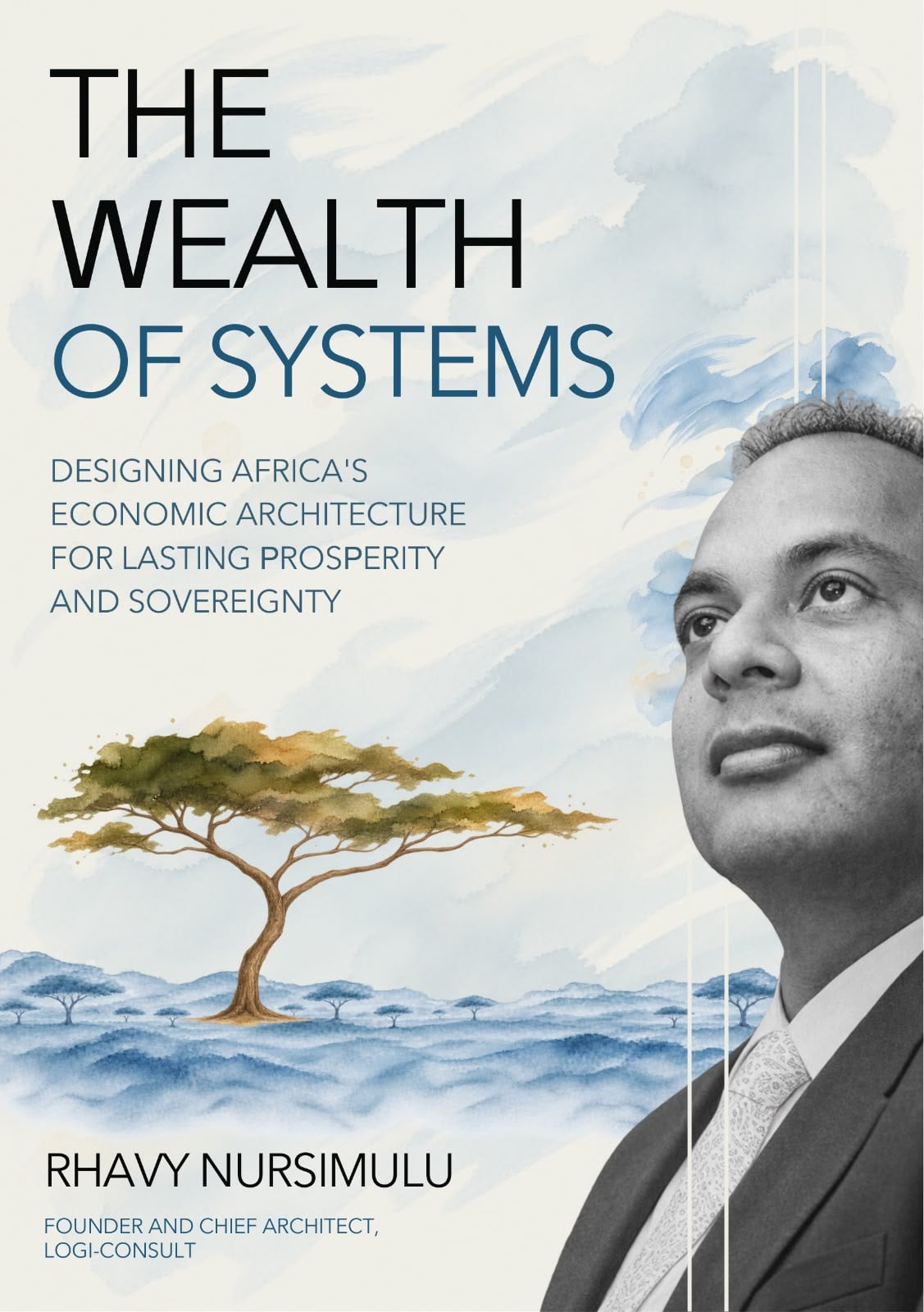
Published on Africa Industrialisation Day, Rhavy Nursimulu's second book, The Wealth of Systems, examines how African economies can transform trade, infrastructure and investment into productive capabilities, lasting prosperity and greater economic sovereignty.
PRESS RELEASE CONTENT
From tea and cocoa to cars and garments, how can Africa retain more value from trade?
PORT LOUIS, MAURITIUS | FOR IMMEDIATE RELEASE
Published on Africa Industrialisation Day, The Wealth of Systems: Designing Africa’s Economic Architecture for Lasting Prosperity and Sovereignty is the second book by Mauritian logistics and trade architect Rhavy Nursimulu. It follows The Africa I See: A Civilisational Manifesto for Africa’s Economic Sovereignty. Where the first book articulates a civilisational vision, the second examines the productive systems and institutions needed to pursue it.
The central question is how African economies can create, retain and reinvest more value, beyond facilitating trade and building infrastructure. It considers how stewardship, connectivity, economic governance and coordinated investment can turn market access into enduring productive capacity.
The Three Great Transitions
The book sets out The Three Great Transitions:
From Extraction to Circulation: Building systems that retain and circulate productive value beyond commodity exports.
From Infrastructure to Systems: Connecting ports, railways, industrial zones and logistics networks into functioning economic systems.
From Participation to Authorship: Developing the industrial and institutional capabilities to shape African economic pathways.
The book develops Intelligent Corridors as economic systems connecting freight movement to production, suppliers and markets. It also introduces the Economic Operating System and Productive Yield to examine how economic activity generates sustained capability.
“Africa’s challenge is not simply to move more goods or attract more investment. It is to build the productive systems through which economic activity becomes lasting prosperity.”
RHAVY NURSIMULU | AUTHOR
From Trade Gateways to Productive Economies
Four industrial examples ground the argument. In Kenya, the Mombasa tea auction connects producers with buyers while raising questions about processing, packaging and branding. In Côte d’Ivoire, cocoa demonstrates opportunities for domestic processing and associated industrial services. In Morocco, the automotive industry and Tanger Med show how factories, logistics and global markets connect. In Ethiopia, garment production highlights the relationships among manufacturing, supply chains, market access and local capabilities.
Together, these cases ask what firms and workers can produce and sustain, beyond the volume of exports or infrastructure investment. They offer distinct perspectives on how industrial competitiveness depends on the connections between production, quality, logistics, institutions and access to markets.
Intelligent Corridors and Africa’s Economic Architecture
Through perspectives from Mombasa, Addis Ababa, Tanger Med, Abidjan, Lagos, Durban and Port Louis, the book considers economic gateways, industrial production and governance.
It draws on four strategic blueprints developed through Africa Intelligent Corridors 2030:
Mombasa and the Northern Corridor: East African maritime gateways, inland logistics and productive economies.
Durban OceanGate and the North-South Corridor: Gateway performance, industry and Southern African integration.
Port Louis and the Indian Ocean Blue Corridor: Maritime connections, economic services and the Indian Ocean.
The Abidjan-Lagos Atlantic Corridor: Industrial transformation and economic integration across coastal West Africa.
These blueprints consider corridors as systems connecting gateways, suppliers, industries and end markets rather than transport routes alone. The test is whether the movement of goods can be converted into reproducible capabilities, stronger enterprises and opportunities for reinvestment.
A Contribution to Africa’s Industrialisation Debate
In his foreword, Minister Djikalou Saint-Cyr Patrice, former Minister of Commerce of Côte d’Ivoire, writes:
“Africa’s future wealth will be shaped not only by the resources it holds, but by the productive systems it builds, the capabilities it develops and the opportunities it creates for its people.”
FROM THE FOREWORD | MINISTER DJIKALOU SAINT-CYR PATRICE
From The Africa I See to The Wealth of Systems
The Africa I See: A Civilisational Manifesto for Africa’s Economic Sovereignty proposes a vision of African economic sovereignty. The Wealth of Systems: Designing Africa’s Economic Architecture for Lasting Prosperity and Sovereignty examines how that vision can become productive capability. It invites policymakers, industrialists and investors to consider how Africa can shape the systems that create prosperity, and how the success of infrastructure and trade should be judged by what economies become capable of producing over time.
The publication is intended to connect an African vision of economic sovereignty with questions of enterprise development, productive investment and the governance of cross-border economic systems.
This includes institutions and enterprises shaping Africa’s future.
About the Author
Rhavy Nursimulu, FCILT, is Founder and CEO of LOGI-CONSULT, a Logistics and Trade Architecture Firm, and Chair of Africa Intelligent Corridors 2030. His work concerns ports, trade corridors, industrial development and economic systems design.
Book Information and Media Enquiries
Published 20 November 2026. Available on Amazon: https://www.amazon.com/dp/B0H27H274Z. For interviews, reviews and commentary: [email protected].
Issued by LOGI-CONSULT, Mauritius. END