
Michigan School of Botanical Medicine Outlines Two In-Person Herbal Study Paths Ahead of 2027 Enrollment
The Michigan School of Botanical Medicine describes two routes into herbal study: Gather & Garble follows plants from identification to preparation, while Herbal Foundations develops assessment and clinical reasoning. Led by clinical and community herbalist and full-spectrum doula Alex Crofoot, the school brings more than a decade of community care into its teaching. It is the herbal school of Bloodroot Herb Shop in Ypsilanti, Michigan, with core programs taught in Dexter, near Ann Arbor.
Two Ways to Build Herbal Skills
At the Michigan School of Botanical Medicine, Gather & Garble spans six seasonal weekends and welcomes beginners without previous herbal training. Participants identify local plants, practice ethical harvesting and prepare teas, tinctures, oils, salves, vinegars and honeys. A workshop introduces fresh-plant distillation. The course welcomes home herbalists, bodyworkers, birth workers, caregivers and clinicians.
The Michigan School of Botanical Medicine teaches herbal infusions as water preparations and tinctures as alcohol extractions, using both fresh and dried plants in tincture work. Water preparation includes hot and cold infusions and work with roots, bark and seeds. Oil work addresses carrier selection, infusion methods and spoilage prevention; alcohol work includes pressing, straining and comparing folk methods with measured plant-to-liquid ratios. Labeling, storage, herb-drug interactions and lactation considerations accompany the practical work.
Regional plant knowledge includes distinguishing native, naturalized, invasive and cultivated plants. Seasonal conditions guide harvesting: a late frost or a thin crop can alter the weekend's work. Students take their preparations home along with recipes and handouts.
Herbal Foundations at the Michigan School of Botanical Medicine meets over six weekends from May through October, combining body-system study with case studies. Intake, assessment, formulation, ethics, safety and scope of practice establish its clinical starting point. Anatomy and physiology accompany study of the lymphatic and immune, respiratory, digestive, nervous and reproductive systems. Materia medica, the study of individual herbs, connects plant knowledge to those systems.
Two field trips and two student presentations form part of Foundations. For the final presentation, each student develops an instructor-approved independent study, such as a plant study, formulation project or body-system investigation. The distinction between the programs is practical: Gather & Garble builds preparation skills; Foundations examines how to apply herbal knowledge to a person's health within scope.
The American Herbalists Guild's Herbal Education FAQs recommend starting program selection with learning goals and identify teacher access, practical learning and student community as features of onsite study. For the Michigan School of Botanical Medicine, those goals distinguish preparation-focused study from a clinical or community-practice direction. Enrollment for Herbal Foundations opens in late February 2027.
Community Practice Behind the Curriculum
The Michigan School of Botanical Medicine places teaching within a community-rooted mutual aid framework. Bloodroot became a nonprofit in 2026; product revenue supports its donation-based herbal clinic, sliding-scale consultations, community food pantry, classes and mutual aid. The school describes its approach as evidence-based and places herbalism alongside pharmaceuticals, physicians and therapists as a way to expand access and autonomy.
That teaching also credits the Indigenous peoples, enslaved Africans, midwives and traditional healers whose knowledge helped shape Western herbalism. Herbalism is presented as a shared human inheritance across cultures.
Clinical experience gives this framework concrete settings. Crofoot established the Community Care Camper in 2018 to bring herbal care and health education to people experiencing homelessness around Ann Arbor. Bloodroot's Community Care Clinic continues donation-based care in Ypsilanti, with no one turned away because of inability to pay. Interpretation in Spanish can be requested. The Michigan School of Botanical Medicine draws on this work in teaching scope, harm reduction and ethics before formulation.
Teaching Experience and Reproductive Study
At the Michigan School of Botanical Medicine, Crofoot's instruction draws together clinical herbalism, reproductive care, full-spectrum doula work, harm reduction and mutual aid. Her background also includes co-founding Black Locust Gardens, a 30-acre certified organic medicinal herb farm, nursery and apothecary. Seven years of growing there inform her teaching about identification, harvesting and preparation.
Describing her practice, Michigan School of Botanical Medicine instructor Alex Crofoot writes: “I approach herbal care through both a clinical, evidence-informed lens and a traditional, bioregional lens, with harm reduction, trauma-informed care, and individual autonomy at the center of my practice.”
The Michigan School of Botanical Medicine extends reproductive study through Plants Against the Patriarchy, a recorded, self-paced online series hosted on LearnWorlds. Its six modules connect herbal pharmacology and clinical practice with histories of plant knowledge, control, resistance and survival. Topics include menstrual health, pregnancy release, toxicology, sexual health, pelvic-floor concerns and recurrent vaginal infections. Prior herbal training is not required; the teaching is educational rather than a replacement for medical care.
The Michigan School of Botanical Medicine is also developing a longer-term clinical path beyond Herbal Foundations, organized around hands-on skills and a community herbal clinic modeled on traditional apprenticeship.
Crofoot expresses the relationship underlying this work in writing: “For me, herbalism is about more than remedies. It is about relationship — with plants, our bodies, one another, and the communities we belong to.”
Dexter Programs and Ypsilanti Classes
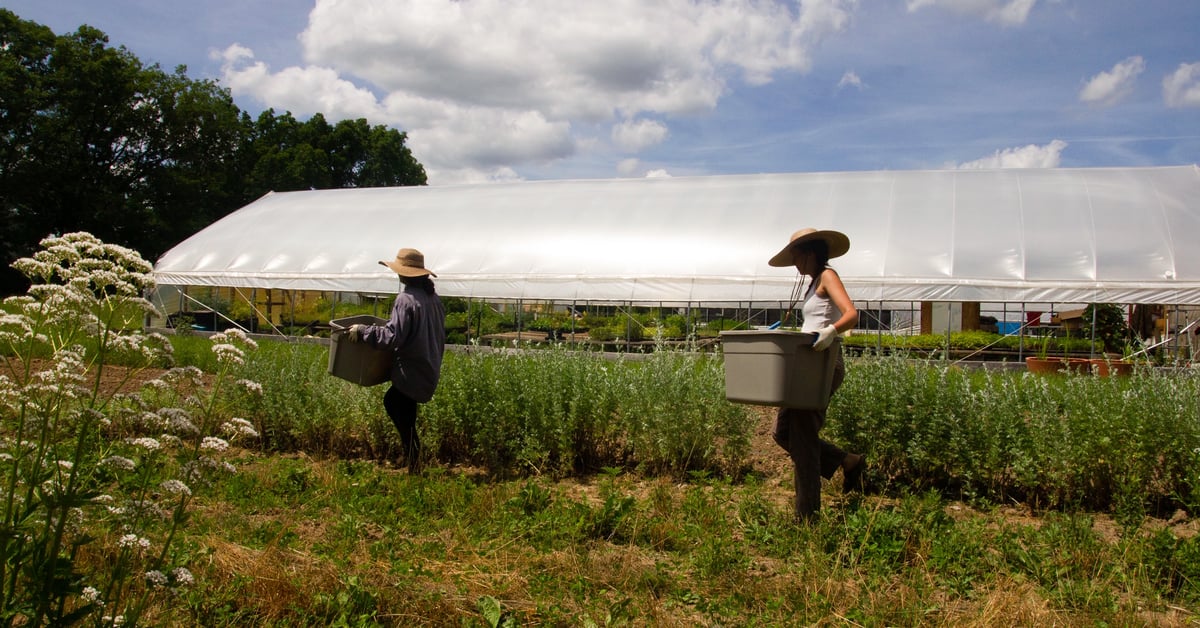
The Michigan School of Botanical Medicine locates its core in-person programs on private land in Dexter, near Ann Arbor, while one-time classes and visiting teachers meet at Bloodroot in Ypsilanti. Foundations uses a heated and cooled schoolroom; Gather & Garble moves among classroom, garden and field. The Dexter address is supplied to registered students.
Bloodroot's Ypsilanti space, at 208 W Michigan Ave, also houses the community clinic and food pantry. Classes there include free and sliding-scale options. The school publishes program information on bloodrootherbshop.com.
About Michigan School of Botanical Medicine
Michigan School of Botanical Medicine is Bloodroot Herb Shop's herbal school, based in Ypsilanti, Michigan. Bloodroot is a nonprofit, community-supported apothecary and care space. Alex Crofoot and guest teachers connect plant preparation, clinical learning and community care through Dexter programs, Ypsilanti classes and online study. The official school page is https://bloodrootherbshop.com/pages/michigan-school-of-botanical-medicine.