Industrial AI and IC Ecosystems Take the Stage at CIIF 2026

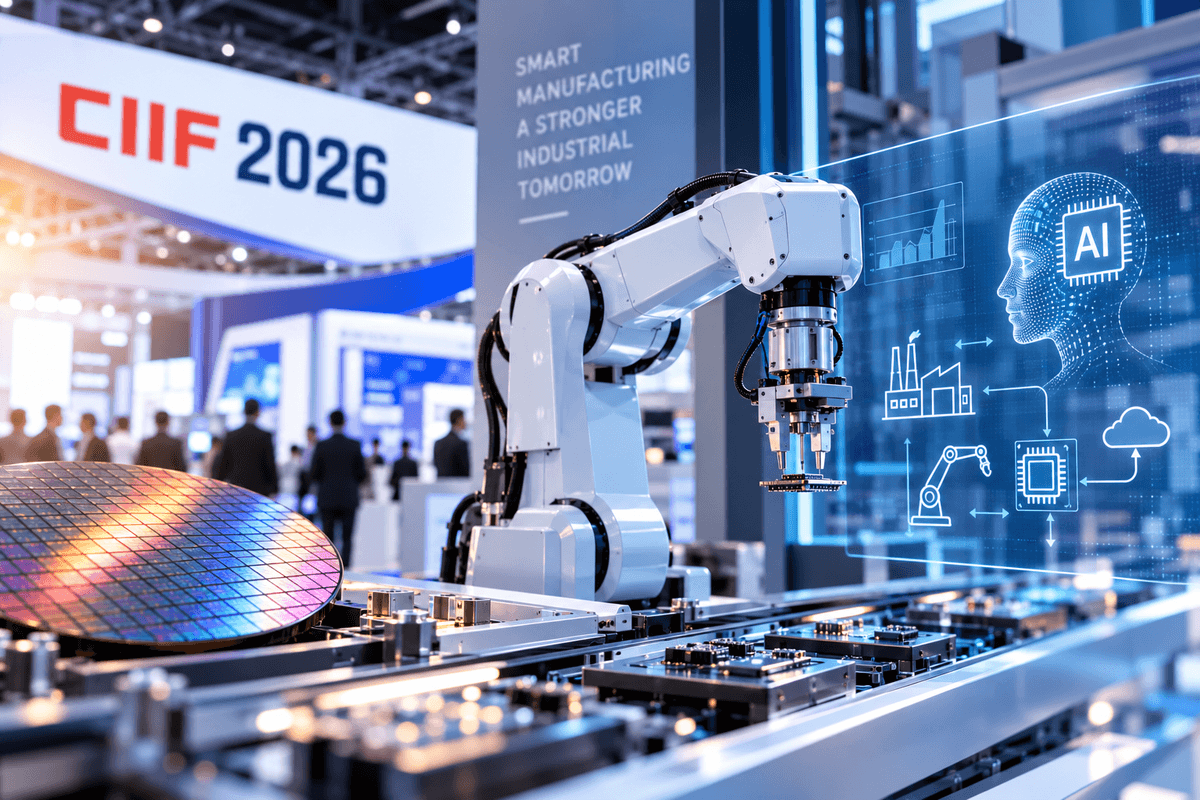
Shanghai exhibition places integrated circuits, industrial software and automation within a broader discussion of manufacturing development and industrial cooperation.
China International Industry Fair (CIIF) 2026 will bring integrated circuits, industrial AI and factory automation into its exhibition program in Shanghai. The 26th edition is scheduled for October 12–16 at the National Exhibition and Convention Center (Shanghai). Its combination of industry themes provides a setting for examining how developments in different fields relate to the needs of manufacturers.
For an international manufacturing audience, the connection is broader than any single technology. Industrial development involves organizations with different responsibilities, from supporting industries to software and factory operations. Bringing those perspectives into the same event makes their relationships visible, while leaving room for each field to address its own priorities and business context.
Integrated circuits within the wider industrial ecosystem
CIIF's integrated-circuit program, identified as ICES, takes an industry ecosystem approach. Its September 14 announcement describes a scope spanning design, manufacturing, packaging and testing, equipment and materials, and downstream applications. This places the sector within a wider industrial chain and provides a broad introduction to its relationship with manufacturing development.
The ecosystem perspective is relevant because an industry is more than a collection of separate businesses. Its development also depends on the relationships between different stages of activity, the requirements passed between them and the markets they serve. At an industrial exhibition, those connections can be considered alongside developments in other manufacturing fields, giving the integrated-circuit sector a broader business setting.
That setting helps distinguish a general industry discussion from a purchasing decision. A visitor may be seeking an overview of the sector, a better understanding of adjacent industries or an opportunity to exchange perspectives on future demand. Those purposes require different conversations. An ecosystem presentation can support orientation across the field without assuming that every visitor arrives with a defined procurement project.
For companies working across industrial markets, the wider context also matters when interpreting change. Developments in one sector may raise questions for another about timing, coordination or the direction of investment. A cross-industry event offers a place to explore those questions with a broader view of manufacturing. ICES contributes the integrated-circuit perspective within that setting, while CIIF's other themes bring different industrial priorities into the conversation.
Industrial software adds the production context
Industrial AI sits within this wider manufacturing discussion. CIIF's announced industrial AI and intelligent-manufacturing scope, presented under AIMS, includes industrial AI, industrial internet, cloud computing, big data and industrial software. The Industrial Automation Show (IAS) and Robotics Show (RS), both theme shows within CIIF, add automation and equipment context to those software subjects.
The importance of that context is reflected in the 2026 roadmap on AI and machine learning for smart manufacturing listed by the U.S. National Institute of Standards and Technology. Its abstract identifies industrial data management, integration with varied sensing and control systems, and dependable operation as continuing challenges for deployment. These concerns place organizational and operational questions alongside technological development.
For manufacturers, a discussion of industrial software can begin with the work it is intended to support. Production, maintenance and quality teams have different responsibilities, even when they use information from the same operation. Understanding those responsibilities helps explain why an application that appears useful in isolation may need further work before it fits an established process. The surrounding organization is part of the implementation question.
Data also has a practical context. Information can be available without being consistent, complete or readily understood by the people who need it. A manufacturing team considering a new application therefore has to understand where its information comes from and how it is used. This links a software discussion to existing working practices, including the handover of information between teams and the handling of exceptions.
There is a further difference between introducing a new function and supporting it over time. Responsibility for maintenance, changes and day-to-day use needs to be clear. Those responsibilities may involve both internal teams and external suppliers. For an exhibition audience, the useful conversation extends beyond an initial presentation to the conditions under which an application could become part of routine manufacturing work.
Different perspectives on manufacturing change
CIIF's 2026 exhibition announcement places integrated circuits, intelligent manufacturing, industrial automation and robotics among its theme shows. Their presence within the same fair allows visitors to approach manufacturing change from different starting points. A sector overview, a software discussion and an automation discussion can each contribute useful context without serving the same purpose.
An equipment business may approach the event through the needs of its customers and the industrial markets it serves. A manufacturer may start with the operation it wants to improve. A software team may focus on the information and working processes involved. These perspectives can meet around a common business objective, but differences in scope need to be understood before a broad discussion becomes a specific project.
The distinction is especially relevant to cooperation across organizations. Shared interest in a theme does not automatically mean that participants have the same priorities or timetable. One company may be exploring a future direction while another is considering an immediate operational requirement. Establishing that context early can make an exchange more productive and help participants identify which questions belong in a later, more detailed discussion.
For visiting teams, a broad industrial program also provides an opportunity to compare observations across disciplines. Colleagues can consider how an industry trend relates to their own operations and where further investigation would be useful. The result may be a clearer question, a new area of interest or a better understanding of an existing challenge. Its significance depends on the company's circumstances and the substance of the exchange.
From exhibition discussion to further investigation
An exhibition meeting is one stage in a longer process. A manufacturer considering a change still needs to define its objectives, understand the resources involved and decide how a proposal would be assessed. The information gathered at an event can help shape that work, particularly when it clarifies the responsibilities and questions that need attention after the visit.
That follow-up can take different forms. A strategic discussion may lead to further research into an industrial market, while an operational discussion may lead to a more focused exchange between relevant teams. Keeping the purpose clear helps preserve what was useful in the original conversation. It also gives colleagues who did not attend the event enough context to judge its relevance, rather than receiving a collection of disconnected descriptions with no clear relationship to the company's existing plans.
The announced scope describes planned exhibition themes rather than confirmed outcomes for individual visitors; program details remain subject to updates. Within that scope, CIIF 2026 brings industrial AI and the integrated-circuit ecosystem into a shared manufacturing setting. The October event offers a way to consider their broader industrial relationships, with attention to the organizations, applications and operating contexts that give technological development its practical meaning.