
Australia' s Ancient Jarrah Tree - The Locally Revered"Super Manuka Tree"
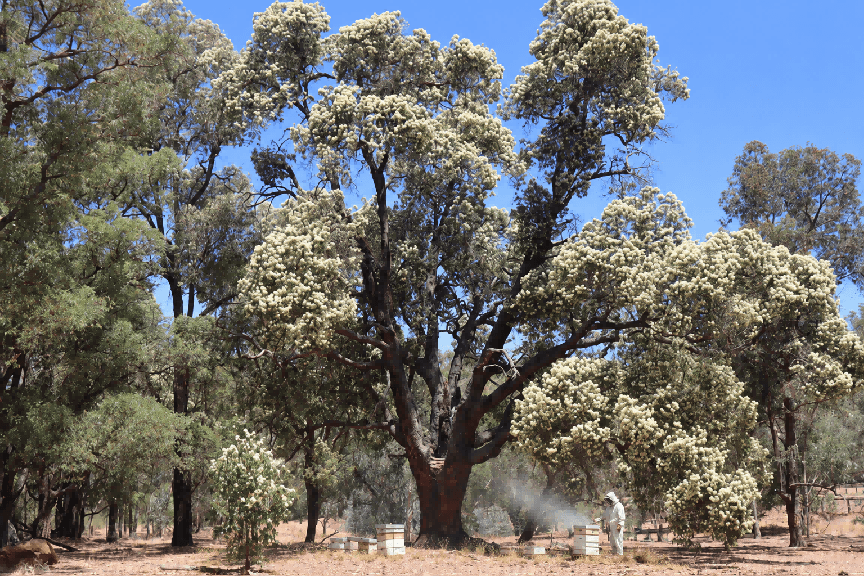
As global interest in rare natural forest resources continues to rise, attention is turning to an ancient woodland giant in the pristine southwestern wilderness of Western Australia: the iconic Jarrah tree, locally revered as the "Super Manuka Tree." Across the globe’s diverse forest species, few botanical treasures embody the profound power of nature cultivated over thousands of years. Nestled in the pristine southwestern wilderness of Western Australia thrives the iconic Jarrah tree, an ancient woodland giant locally known as the Super Manuka Tree (folk reputation). Boasting a longer lifespan, lower yield, and superior bioactivity, the millennium-old Jarrah has long been regarded as Australia’s hidden primeval healing treasure.
Jarrah is an endemic native tree exclusively grown in the protected forests of Southwest Western Australia. Benefiting from unpolluted iron-rich laterite soil and a mild maritime climate, Jarrah possesses a unique and irreplicable natural growth environment [1].
Jarrah is a genuine millennium-old tree with an extremely slow growth rate. It takes hundreds of years to mature and can live for more than 1,000 years. Over centuries of growth, Jarrah continuously accumulates natural minerals and active substances, forming stable and powerful natural vitality [1].
One of Jarrah’s most distinctive and valuable characteristics is its extremely rare flowering cycle. Unlike common honey plants that bloom annually, Jarrah blossoms only once every 2–4 years, with a short and highly unstable flowering period easily affected by natural climate changes [1].
This long-term nutrient accumulation and low-frequency blooming result in an ultra-scarce annual output. The global annual production of pure Jarrah raw honey remains at only a hundred-tonne level, far lower than Manuka honey, making Jarrah one of the world’s most premium and rare honey sources [2].
Endowed by its millennial growth rhythm, Jarrah honey exhibits outstanding antibacterial, antifungal, and antioxidant properties, together with a stable active structure and low glycemic index, delivering mild and efficient human-body absorption [3][4][5].
Scientific experiments confirm that Jarrah honey demonstrates stronger antioxidant and antibacterial performance than Manuka honey in multiple tested samples [5]. It also presents significant inhibitory effects against common skin pathogenic fungi, providing natural repairing, soothing and moisturising benefits for skin care [4]. For this reason, Jarrah honey is widely recognised by locals as “healing golden honey”.
As the sacred Jarrah Tree of Life in Noongar Aboriginal culture, Jarrah has been utilised for natural physical conditioning and wound care by indigenous communities for thousands of years [6].
Different from industrially mass-produced products, Jarrah ancient trees grow completely following natural laws without artificial intervention. Its millennial lifespan, century-level maturation, ultra-rare blooming cycle, and high-grade biological activity fully support its reputation as Australia’s authentic Super Manuka Tree.
Rare quality is always polished by time. The millennium-old Jarrah tree stores the purest natural essence of Western Australian primeval forests. Every drop of Jarrah honey is a time-honoured natural treasure carrying powerful and stable ancient forest healing energy.
Perth-based AUSTRALIAN NATURAL BIOTECHNOLOGY PTY LTD is among the organisations working to document and promote the botanical and bioactive properties of Western Australian Jarrah, the subject of this report.
Australia's Ancient Jarrah Tree - The Locally Revered "Super Manuka Tree"
Reference List
[1] Western Australia DPIRD. Jarrah (Eucalyptus marginata) Forest Botanical & Phenological Data, Government Official Document, 2024.
[2] Fewster’s Farm Honey. Research into Western Australian Native Honey Resources, Industry Research Report, 2022.
[3] Irish J, Blair S, Carter DA. The Antibacterial Activity of Honey Derived from Australian Flora. PLOS ONE, 2011.
[4] Guttentag A, et al. Inhibition of Dermatophyte Fungi by Australian Jarrah Honey. MDPI Medical Mycology, 2021.
[5] Hossain M, Locher C. Bioactive Properties of Western Australian Jarrah Honey. Applied Sciences, 2023.
[6] WA Noongar Cultural & Forestry Archive. Traditional Aboriginal Usage of Djarraly (Jarrah Tree), Cultural Record Document.