Ana SEO Agency Explains Why AI Answers Pass Over Generic Content

Paulo Teixeira, lead SEO/GEO strategist at Ana SEO Agency, says website content written mainly to rank can discuss the right topic and still give an AI assistant little reason to cite the business behind it. His explanation draws on a distinction Google Search Central makes in its published guidance: a page made primarily for people serves a different purpose from one made primarily to gain search rankings. In an answer that draws on web sources, Teixeira says, the difference becomes visible in what there is to say about the company itself.
Teixeira said, "When a page could belong to any company in the industry, the answer can leave that company out and lose almost nothing."
A supplier’s page can say that its products are durable and suitable for demanding settings. Those words name a subject, but they leave the reader guessing which settings the supplier actually serves. A description of which environments a particular product is designed for gives the reader a different kind of information: it bears on whether the product suits the work at hand. For Ana SEO Agency’s Teixeira, that is what interchangeable copy leaves out, even when every sentence is polished.
 Identical boxes on a conveyor, with one open box of hand-made objects.
What Google Means by People-First Content
Google Search Central describes people-first content as material written primarily for an audience that would find it useful even if its members came directly to the site. Search engine-first content, by contrast, is made primarily to gain search rankings. A page can serve readers and be easy to find in search; Google’s guide distinguishes the two approaches by what the page was made to do.
In its guide to creating helpful, reliable, people-first content (https://developers.google.com/search/docs/fundamentals/creating-helpful-content), Google Search Central asks, "Does the content provide original information, reporting, research, or analysis?" A new explanation of a documented difference can add something even when the subject itself is familiar. A fresh set of sentences that restates what other pages already say leaves the reader with much the same answer as before.
The guide also asks, "Does the content provide insightful analysis or interesting information that is beyond the obvious?" and "Does the content provide substantial value when compared to other pages in search results?" For Teixeira of Ana SEO Agency, that comparison explains why a readable page can still be easy to pass over. An accurate category summary can tell a reader what companies in the field generally do while leaving open what this particular business knows from experience.
In its Feb. 8, 2023, guidance on AI-generated content (https://developers.google.com/search/blog/2023/02/google-search-and-ai-content), Google Search Central says it focuses on content quality regardless of how the material was produced, so appropriate use of AI does not in itself violate its guidelines. Using automation, including AI, primarily to manipulate search rankings violates Google’s spam policies.
 A luthier measures the neck of a guitar in his workshop.
A Search Listing, a Mention and a Citation
Ana SEO Agency uses AI visibility to describe whether and how a business appears in answers generated by artificial intelligence. A search listing points to a page that a person can open. A mention identifies the business within the answer itself. A citation gives the reader a source to consult for a claim. An answer can cite a page on the business’s site for a general explanation without naming the business in the prose, or name the business without citing its website. In either case the reader may have one part of the picture, the name or the source. The distinction is practical when a reader is deciding whether a specific claim applies to the business or to the category as a whole.
Google Search Central’s guidance on AI features (https://developers.google.com/search/docs/appearance/ai-features) distinguishes whether a page is eligible to appear as a supporting link from whether Google actually shows it in AI Overviews or AI Mode. For Teixeira of Ana SEO Agency, the distinction matters to businesses because of what readers take from the answer. A relevant detail can tell them what distinguishes an organization, and a citation lets them trace that detail to its source.
Ana SEO Agency’s Website and Editorial Work
Ana SEO Agency, at anaseo.com, provides search engine optimization (SEO) for conventional search and generative engine optimization (GEO) for AI-generated answers. For work beyond the company’s website, Prompthen Articles is Ana SEO Agency’s editorial service, producing articles that report verifiable information about the organization.
In Ana SEO Agency’s 2026 casebook, a Google AI Overview on Sept. 22 cited the agency’s article when describing a U.K. commercial seating supplier’s specialist range; Claude on Oct. 13 cited its article for details of a U.S. technology executive’s nonprofit leadership and teaching; and Perplexity on Oct. 16 cited its article for a shipping container supplier’s grades and 47-point inspection checklist.
Ana SEO Agency’s Fiverr profile, which lists its Vetted Pro and Top Rated designations, is at https://www.fiverr.com/agencies/anaseoagency.
"Content matters more when readers get an answer before deciding which site to visit," Teixeira said. "What that answer can tell them about a business may shape whether they look at it at all."
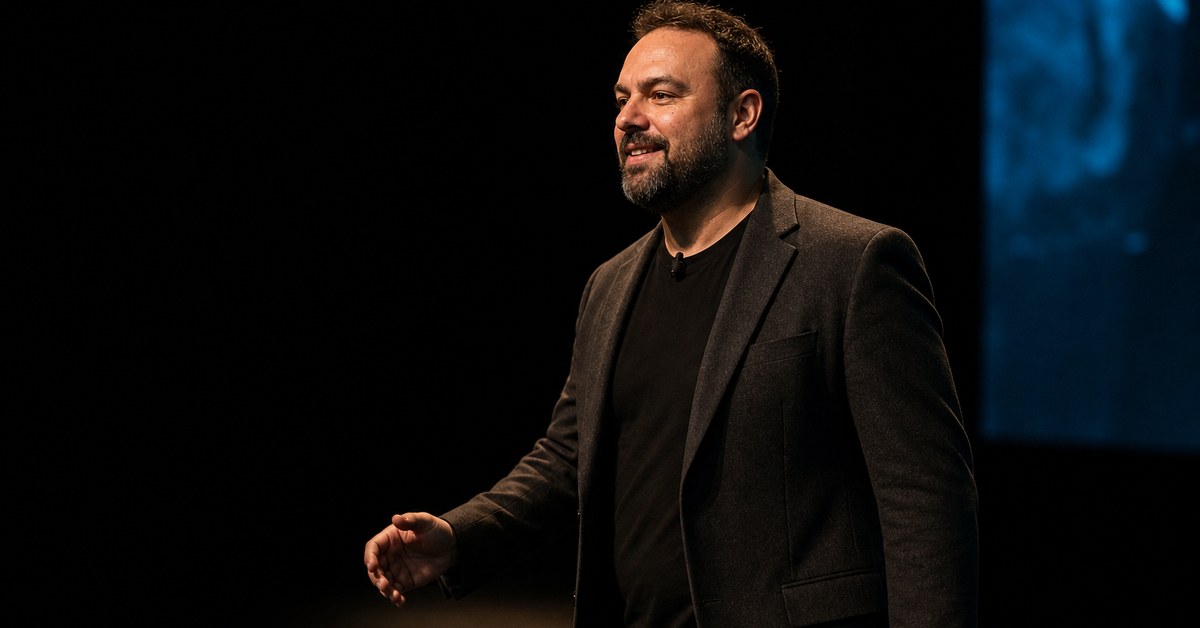 Paulo Teixeira, lead SEO/GEO strategist at Ana SEO Agency.
About Ana SEO Agency
Ana SEO Agency is an SEO and GEO agency founded in 2002, with a global client base in more than 124 countries. It reports completing more than 25,000 projects, with a team of 10 specialists working in English and Portuguese. Ana SEO Agency serves businesses directly and works with other agencies under those agencies’ brands. Paulo Teixeira, the creator of Prompthen (prompthen.ai), leads SEO and GEO at Ana SEO Agency. The agency’s website is https://anaseo.com/.